

The Rheology for Sustainable Manufacturing Technologies (RheoMaTe) project improves the understanding and processing of fiber-based biomaterials, important e.g. for eco-friendly packaging, textiles, and composites. The project tackles the complexity of these materials with improved measurement tools, AI models, and simulations to make handling easier, increase production efficiency, and support greener solutions. The project runs from 1 March 2025 to 28 February 2027. Here we present activities during 2025.
The kickoff meeting
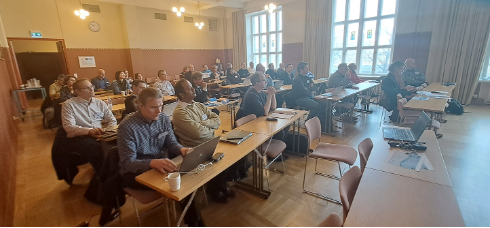
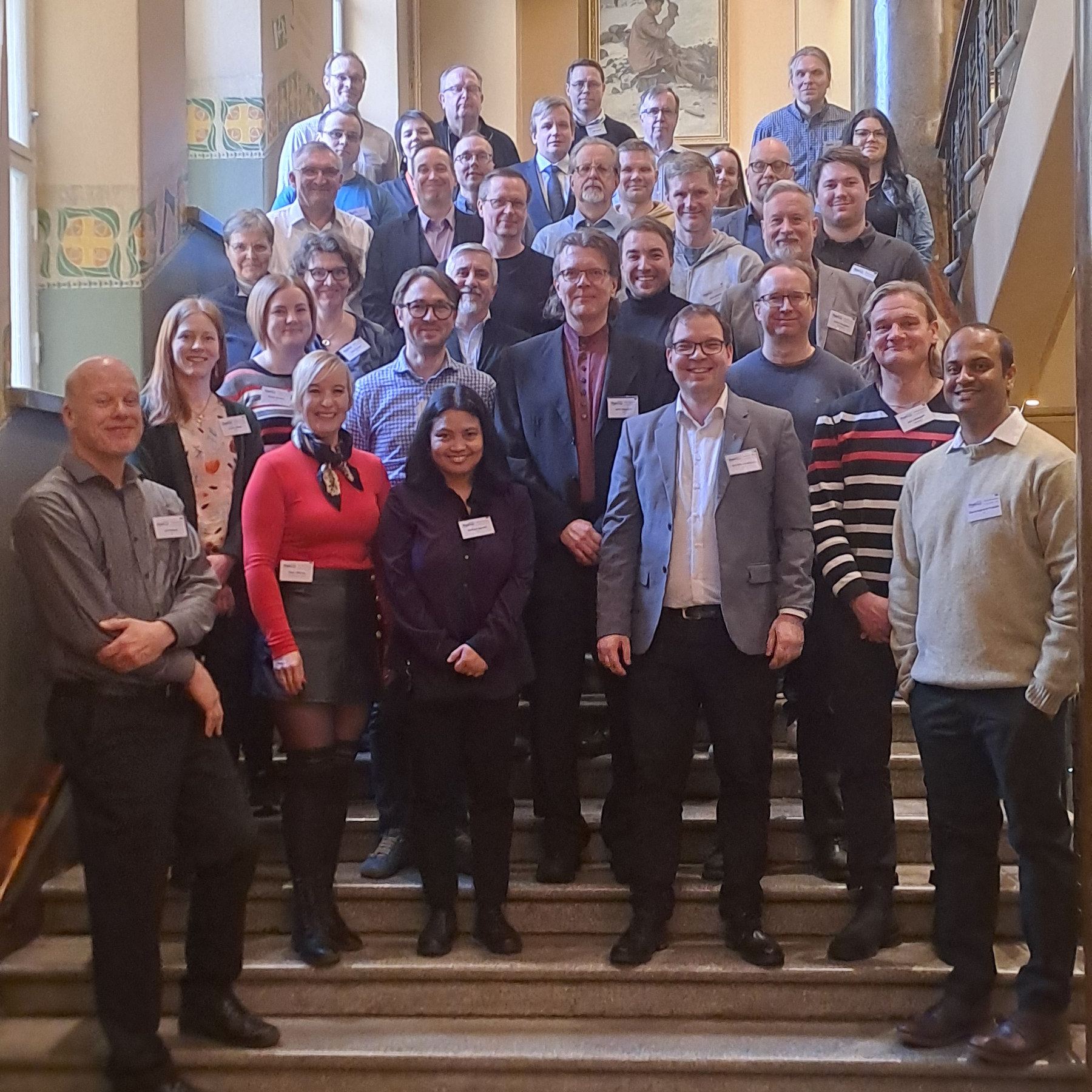
The kickoff meeting was simultaneously the first meeting of the RheoMaTe steering group. Key presentations covered the expectations for a successful Co-Innovation project, led by Ritva Heikkinen (Business Finland), and the connection to the Beyond Circularity ecosystem, presented by Juan Cecchini (Valmet). An invited talk on predicting the rheology and processing of soft matter was given by Roland Kádár (Chalmers University of Technology).
In the afternoon participants engaged in a workshop and networking session where participants could discuss the project WPs more deeply. The workshop was designed to give industry participants an active role in shaping the project by sharing their priorities, challenges, and ideas. It provided a forum for discussion and feedback to ensure the research aligns with real-world needs and delivers practical value. There were 41 representatives participating in the kickoff meeting.
Nordic Rheology Conference and DRG Symposium 2025
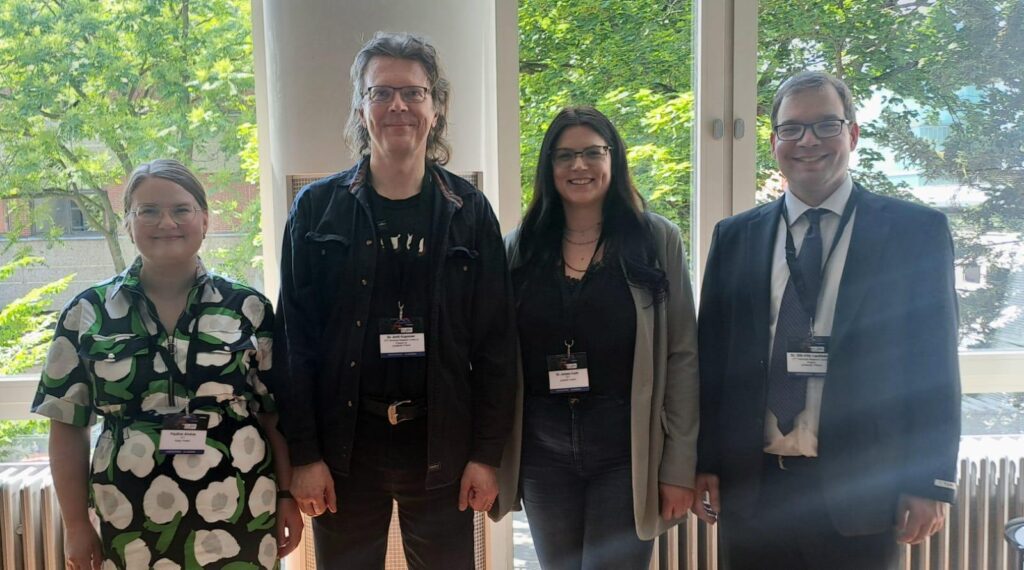
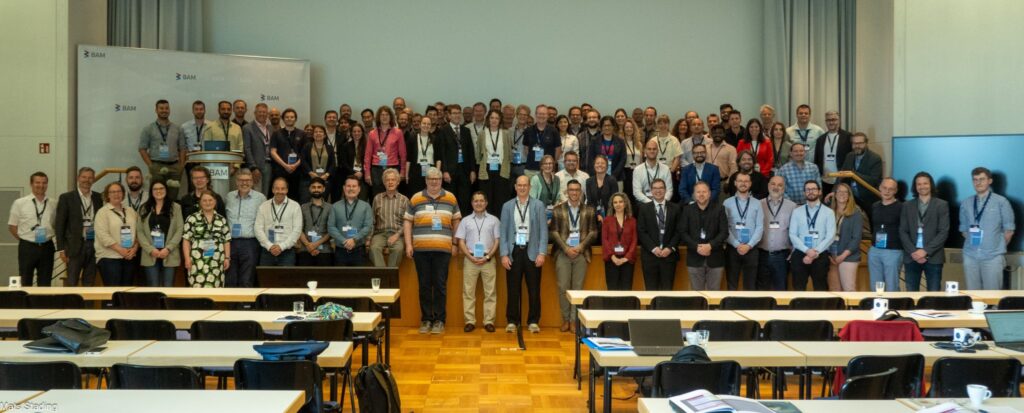
The Nordic Rheology Conference & DRG Symposium 2025 was held in Berlin on June 10-12. The conference was jointly organised by the Nordic Rheology Society and the Deutsche Rheologische Gesellschaft (DRG) and covered all aspects and areas of rheology. During the conference, an industry-academia workshop was held, providing opportunities for discussions with international collaborators and industry representatives.
VTT had several participants at the conference. Antti Koponen gave a presentation titled “Rheological behavior of aqueous suspensions of highly refined pulp fibres”, which is directly linked to research carried out in the RheoMaTe project. Other oral presentations included “Optimizing cellulose film properties: Controlling viscosity and tensile strength through mixture design” by Pauliina Ahokas, “Investigation on the effect of methyl cellulose addition to high fiber-content foams” by Juliane Kade, and “The sol-gel transition of colloidal silica suspensions studied by time-resolved rheometry” by Olli-Ville Laukkanen.
Consortium meeting at VTT Jyväskylä
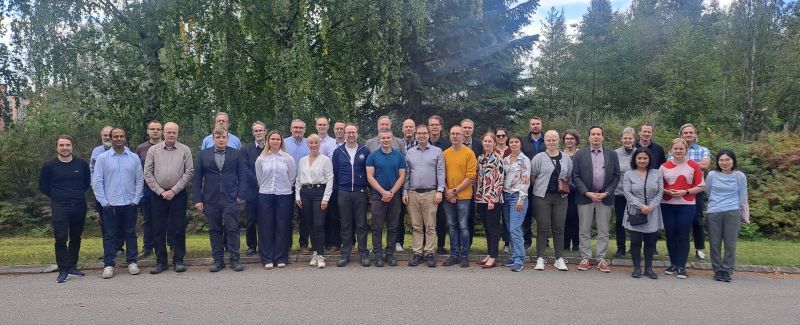
The purpose of the industrial tutor meetings is to gather feedback and guidance from participating companies, ensuring that the research stays relevant to industrial needs. These meetings also help clarify partner roles within the consortium and strengthen collaboration. They are a key channel for industry input and alignment.
The workshop featured presentations on recent results and progress from the project’s research activities, offering insights into ongoing developments. The participants also had a tour in VTT’s laboratories and pilot facilities to experience the technologies and methods firsthand.
There were 37 representatives participating in the consortium meeting.
Research visit to RISE Research Institutes of Sweden
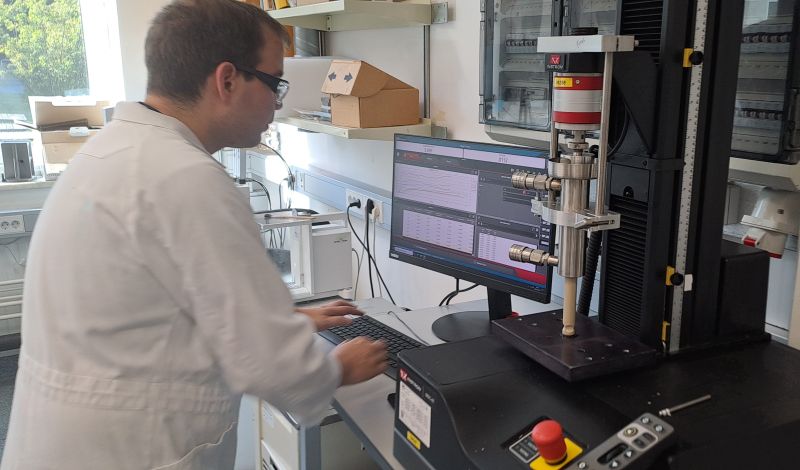
Olli-Ville Laukkanen had a one-month research visit to RISE Research Institutes of Sweden as a part of the RheoMaTe project. The visit focused on the measurement of extensional viscosities of fiber suspensions, and it was very useful with many new things learned and new connections created.
Research highlights from 2025
- The project further developed and refined rheological analysis of capillary flows by applying velocity profiling with Optical Coherence Tomography. Optical Coherence Tomography (OCT) is a noninvasive imaging technique that uses reflected light to produce high-resolution images and velocity profiles in turbid materials.
- The project team has been developing a new approach for measuring extensional viscosity.
- The project team conducted extensive rheological analyses of fiber suspensions and fiber foams, varying the refining level of pulp fibers and examining a broad spectrum of fiber concentrations.
- The project team has identified biobased additives that can be used to improve the flowability – and hence processability – of fiber suspensions at high solids contents.
- CFD capabilities have been advanced through initial simulations of complex fluids using OpenFOAM RheoTool. Machine learning methods for rheological data analysis have been benchmarked and they will be applied to the analysis of the measurement data in 2026.
- During 2025, large-scale pilot trials for rheological measurements were prepared, scheduled to begin in early 2026.